
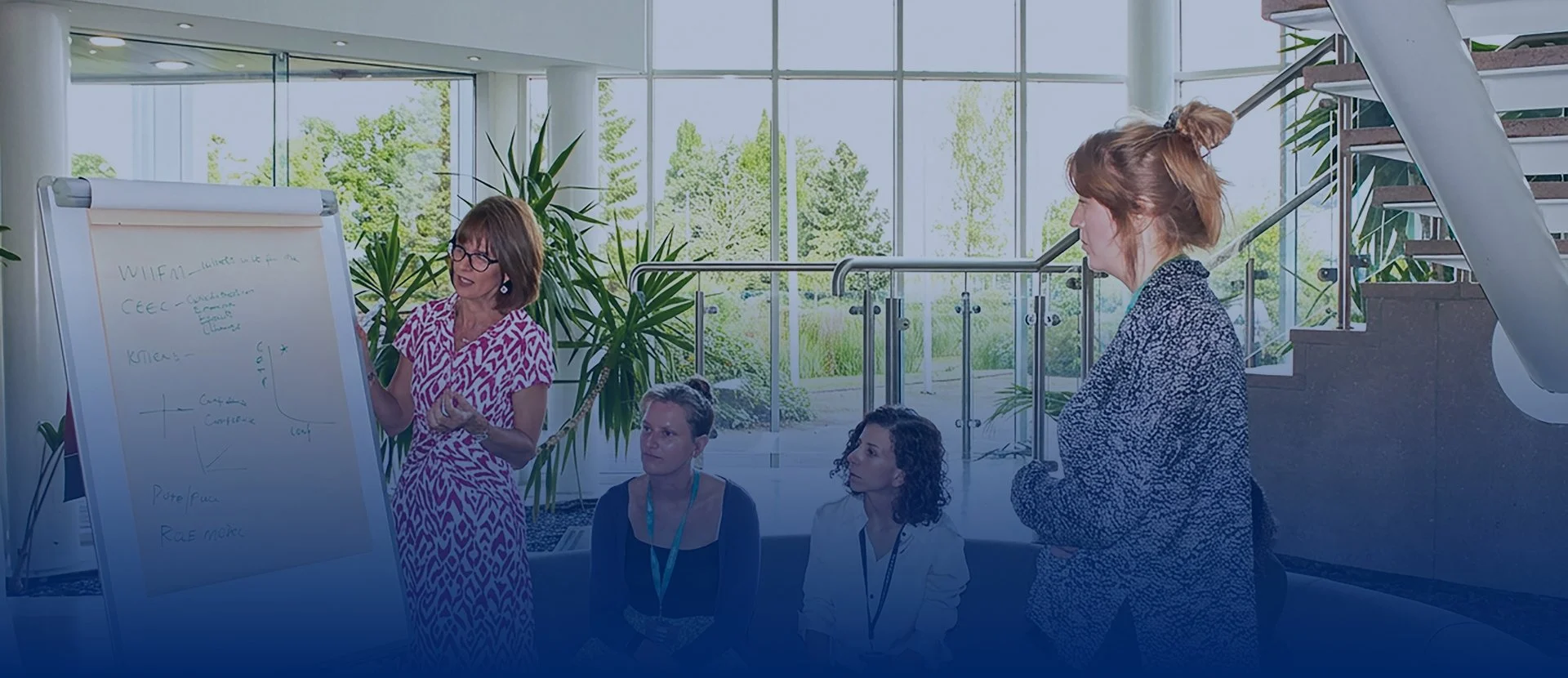
Strengths Based Leadership Development
Helping managers build team performance, increase leadership skills and apply Clifton Strengths insight.
Our strengths-based leadership development programme helps managers understand and apply their natural talents, enabling them to lead teams with confidence.
In-person workshops | Live virtual sessions | Online learning content
Trusted by organisations investing in leadership development



















Why strengths based leadership matters
Many leaders are promoted because of experience and technical expertise. Yet leadership requires a different set of capabilities.
Leaders need to build trust, develop people, manage performance and navigate difficult conversations. Without support, even capable professionals can struggle with these responsibilities.
A strengths based leadership approach helps leaders understand how their natural talents influence the way they lead.
Using the CliftonStrengths framework, leaders gain practical insight into how they:
Build trust and stronger working relationships
Motivate and engage their teams
Make clearer, more confident decisions
Handle conflict, build relationships and influence others
Adapt their leadership style in different situations
Work effectively with colleagues who think differently
Approach decisions and problem-solving
Respond to challenge, pressure and change
When leaders apply these insights in practice, they develop a leadership style that feels authentic, confident and sustainable.
What participants gain
Participants develop:
Insight into their CliftonStrengths leadership profile
A deeper understanding of how their strengths influence leadership behaviour
Greater confidence in leading people and managing performance
Stronger communication and feedback skills
Better decision-making and collaboration within teams
Understanding of how they overplay their strengths and how to manage gaps
Practical tools to apply strengths in real leadership situations
Evidence based impact from strengths based development
Research from Gallup shows that organisations who enable employees to understand and use their CliftonStrengths have...
The Strengths Based Leadership Programme
Our strengths based leadership development programme helps leaders understand and apply their natural talents to lead more effectively. Using the CliftonStrengths framework developed by Gallup, leaders gain practical insight into how their strengths influence their leadership style, relationships and decision making.
Organisations that invest in strengths based leadership development see improvements in engagement, collaboration and team performance.
The programme can be delivered as workshops, multi-session leadership development programmes or blended coaching and training. Below is a range of ‘pick & mix’ modules depending on the needs of your organisation and the experience of your leaders/managers. They can be delivered virtually, face to face or in a hybrid format.
Programme Modules
-
Explore the core skills, behaviours and mindset needed to lead teams with clarity, impact and a people-focussed approach.
Understand how your CliftonStrengths influence your leadership approach
Challenges & responsibilities of today’s leaders/managers
Building culture, values and behaviours
Being an emotionally intelligent leader
Using action-centred leadership to manage the task, build the team and support the individual
Building competence and confidence across your team
Developing a flexible leadership style
Delegating to develop, not dumping through despair
Maintaining communication, collaboration, information parity and relationships across on-site, hybrid and remote teams
Action planning
-
Discover practical approaches to building a motivated, engaged team that delivers strong results.
Using strengths insight to understand what motivates individuals and teams
Understanding the benefits of employee engagement on performance and retention
Using twelve practical ways to increase engagement in your team
Ensuring trust, inclusion and a sense of belonging across the team
Using short-term goals to motivate your team, increase ownership and monitor productivity
Holding effective 1:1s that are ‘check-ins’ rather than ‘checking-up’
Providing effective and performance-boosting feedback
Action planning
-
Build the confidence and skills to manage difficult conversations and manage performance with clarity, care and effectiveness.
Recognising how leadership strengths influence communication and conflict
Setting clear expectations and providing evidence-based feedback
Managing tricky attitudes and behaviours with a team and colleagues
Building confidence to address performance issues
Understanding your strengths can help / hinder you in tricky conversations
Following your organisation’s performance management process
Managing your communication under pressure and using your strengths to help
Preparing for your own performance management conversation
Action planning
-
Strengthen your team’s wellbeing and flexibility with practical strategies for navigating challenge and change.
Understanding wellbeing challenges
Appreciating the business benefit of building wellbeing across your team
Spotting warning signs of poor wellbeing / mental health in individual team members
Using strengths awareness to support resilience and wellbeing in teams
Feeling confident raising concerns with an employee about their wellbeing or mental health
Building adaptability and wellbeing across the team
Managing thought patterns, perception and beliefs positively
Building your team’s sense of perspective and pragmatism
Action planning
-
Learn practical techniques to influence effectively, communicate with confidence, and connect with different colleagues and stakeholders.
Using WIIFM to better impact your colleagues and stakeholders
Recognising how different strengths influence persuasion and collaboration
Understanding what motivates different people
Using voice and body language techniques to increase your impact and authority
Understanding your preferred influencing style
Connecting better with stakeholders by flexing your influencing style
Maximising the value of pre-meeting meetings and networking
Action planning
-
Learn practical approaches to manage change and bring your team with you through uncertainty and transition.
Exploring why teams and organisations change
Recognising common responses to uncertainty and change
Understanding the fight, flight and freeze response
Recognising how our strengths impact our response to change / growth
Using the change curve to recognise different stages of change
Developing a growth mindset during change
Focusing on what sits within our control
Supporting each other as a team through change
Strengthening psychological safety and trust
Action planning
-
Strengthen your ability to plan strategically, set longer-term goals, and lead your team with purpose and direction.
Understanding what strategy is and why it matters
Apply strategic CliftonStrengths themes to planning and decision-making
Using the strategic management process during practical activities
Using PESTLE and SWOT to identify areas where change may be required
Working ‘on the business’ not just ‘in the business’
Setting strategic goals, tactics and objectives to achieve your strategy
Involving your team in setting strategy
Action planning
-
Develop practical strategies to improve decision quality, navigate group dynamics, and make disagreement a strength.
What makes some decision-making hard - even when you're good at it?
Us ing strengths awareness to understand different perspectives in decision-making
Recognising the impact of group dynamics and the HIPPO-effect
Exploring common traps: overconfidence, different types of bias, sunk cost fallacy
Introducing system one and system two thinking
Developing constructive ways to disagree
Understanding psychological safety and its link to effective decisions
Recognising your own decision-making styles and when it helps / hinders
Using a 4-stage model to solve problems and make decisions with others
Action-planning
Contact us to find out how this programme can support your organisation.
What is strengths based leadership?
Strengths based leadership focuses on identifying and developing each leader’s natural talents rather than concentrating only on weaknesses.
Leaders learn how their strengths shape the way they communicate, solve problems and motivate others. By understanding these patterns, they can lead in ways that feel natural and sustainable.
Strengths based leadership development programmes help managers apply these insights in real organisational situations, improving both leadership capability and team performance.
Leaders also need to understand how they can overplay their strengths and how to manage their gaps and areas of weakness.
How strengths based leadership supports teams and organisational culture
Strengths based leadership development often forms part of a wider organisational culture and strengths strategy.
When leaders understand and apply their CliftonStrengths, they begin to recognise the different talents within their teams and how those strengths shape communication, decision making and collaboration.
This creates a shared language for discussing performance, contribution and development.
Over time, teams become better at using individual strengths intentionally, supporting one another’s capabilities and building an environment where people can do their best work.
For many organisations, leadership development using Clifton Strengths becomes an integral part of building culture and performance.
Flexible delivery, designed for real-world demands
Today’s leaders and managers are balancing high workloads and shifting priorities.
That’s why our Strengths-based leadership program is built to adapt to your organisation’s needs, ensuring both quality and impact.
In-person workshops
Bring people together for high-impact, practical learning in a collaborative setting. Ideal for focused discussion, shared insight, and stronger connections across teams.
Live virtual sessions
Engaging, facilitator-led sessions delivered online. Interactive, focused, and designed to encourage full participation from any location.

Online learning hub
Support learning between sessions or beyond the core programme with access to digital resources and optional modules to deepen key topics.

Leadership diagnostics
Use tools including CliftonStrengths assessments and 360 feedback to provide increased self-awareness and spark focused development conversations.

1:1 leadership coaching
Personalised coaching to embed learning, build confidence and support individual development. Delivered virtually for maximum flexibility.

Email Support
Ongoing email support from your trainer for 12 months after completing the programme for those who’d like it.

Strengths based leadership development in action

We recently delivered a strengths based leadership development programme for Hemley Fraser, an international training organisation.
Through a combination of coaching, team workshops and strengths based development, the organisation reported improvements in:
Engagement
Collaboration
Psychological safety
Productivity
You can read the full case study here:
What senior leaders say…

"This programme has been hugely successful, really impactful and is making a real difference in our business. We can already see positive behaviour change, a better culture and improved results."
- Ria Rogers, Head of People, Hemsley Fraser
"We are hugely appreciative of Kate's work with our teams! From coaching to management development training, to Strengths-based development and professional skills, we have been delighted with the quality of Kate's preparation, delivery and ways of working."
- Nick Richards, Head of People, Royal Society of Arts
"Since our strengths-based work with you, team performance has noticeably improved, and our employee engagement scores have increased considerably."
- Vicky Garfitt, Head of Data Activation, Kingfisher plc
Focused on Real-World Leadership and Management
Our approach is practical and grounded in the realities of work.
Leaders explore real challenges such as managing performance, giving feedback, having tricky conversations, navigating change and building stronger teams.
Alongside practical leadership tools, participants gain insight into their CliftonStrengths profile and how their natural talents shape the way they lead.
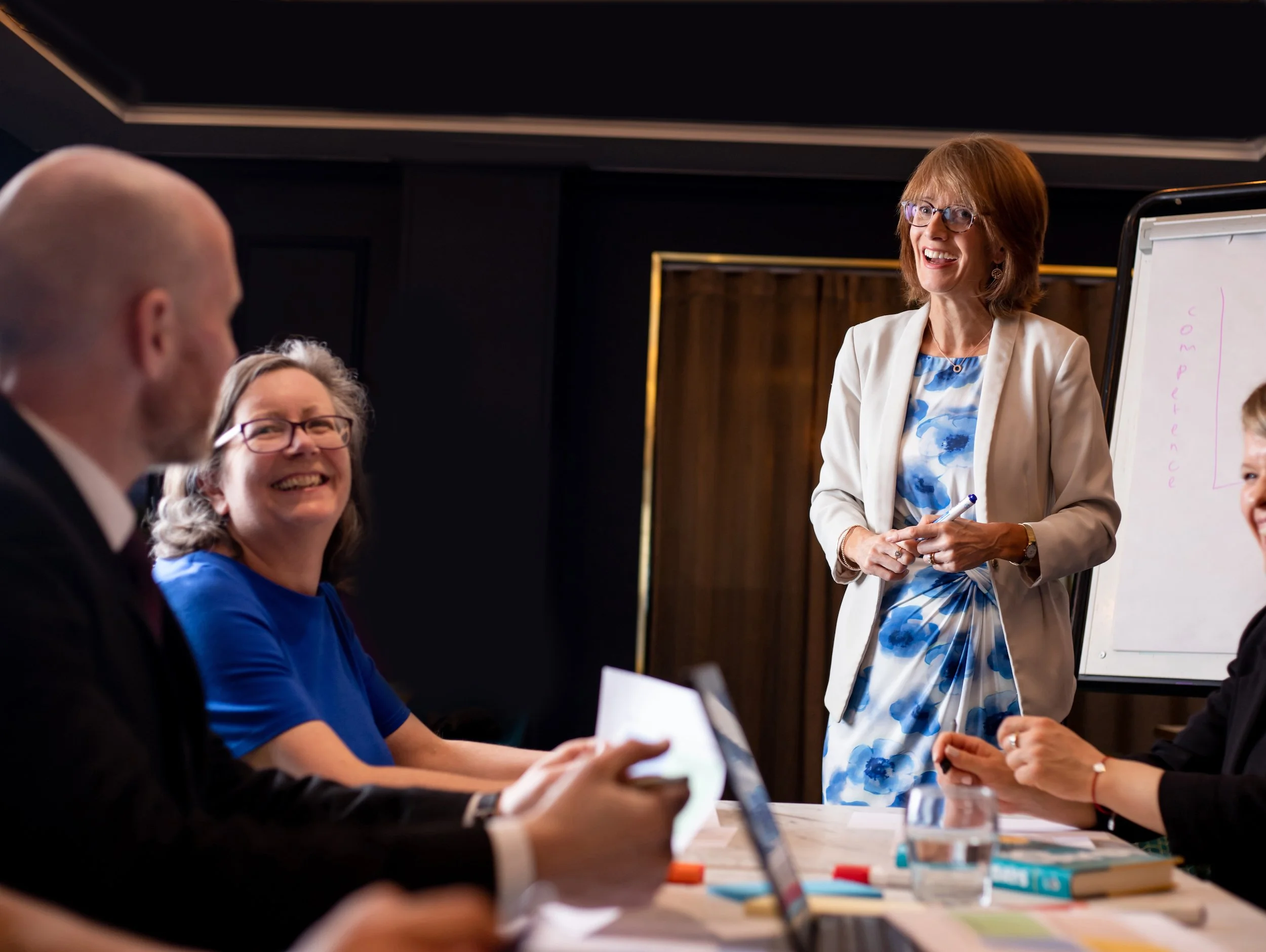
How CliftonStrengths strengthens leadership development
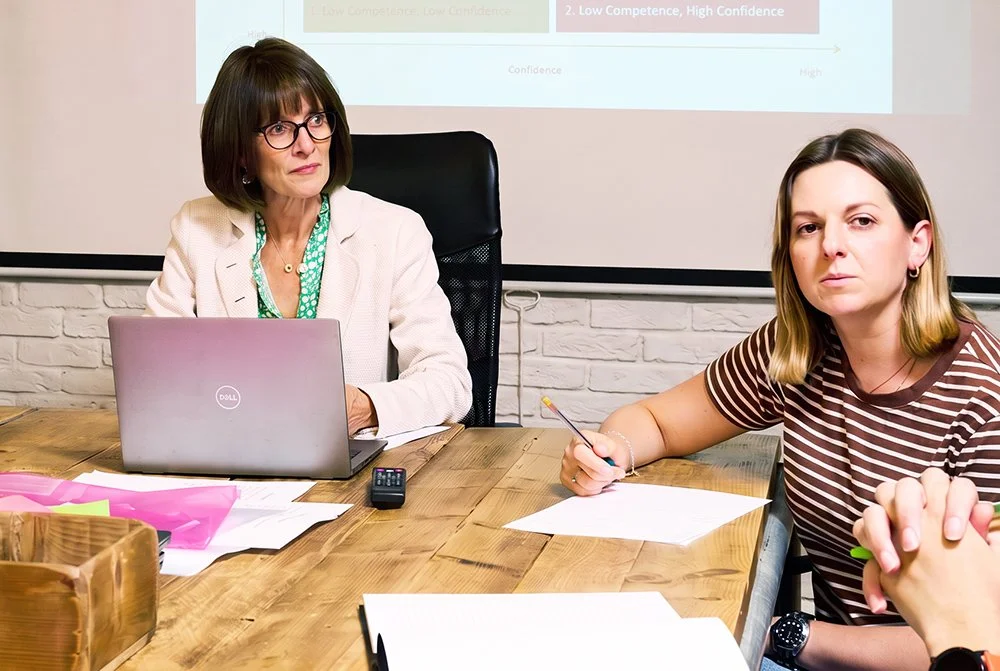
Our programmes often use CliftonStrengths, the strengths framework developed by Gallup.
CliftonStrengths identifies an individual’s most powerful talent themes. These insights help leaders understand:
How they think and make decisions
How they build relationships
How they influence others
How they drive performance
Rather than trying to fix weaknesses alone, CliftonStrengths helps leaders focus on their most powerful capabilities and apply them intentionally in their leadership role.
When used within a leadership development programme, CliftonStrengths provides a powerful language for understanding how individuals and teams work together.
Who is this programme designed for?
Strengths based leadership development is particularly valuable for:
New managers stepping into leadership roles
Experienced leaders seeking deeper self-awareness
Technical experts promoted into management
Organisations developing leadership capability across teams
Many of our clients operate in science, research, engineering and technology organisations where analytical professionals benefit from evidence-based leadership development.

Why organisations choose Kate Jennings Coaching
Kate Jennings Coaching specialises in leadership development and CliftonStrengths for managers and leaders.
Our programmes combine:
Extensive experience working with nationally recognised brands
Practical tools leaders can use immediately
Proven track record using Strengths based approaches, and CliftonStrengths
Evidence-based leadership development
The focus is always on practical leadership development that creates meaningful change.
Ready to explore strengths based leadership development?
If you are considering strengths based leadership development for your organisation, we would be happy to discuss your goals.
Contact us, send a message below or schedule a 15 min call to explore how this approach could support your leaders and teams.

Frequently Asked Questions
-
Strengths based leadership focuses on identifying and developing each leader’s natural talents and applying them intentionally in their leadership role.
Rather than concentrating only on weaknesses, leaders learn how their strengths influence communication, decision-making and the way they motivate others.
-
CliftonStrengths helps leaders understand their most powerful talent themes and how those strengths influence leadership behaviour.
Within leadership development programmes, these insights help leaders improve communication, decision-making and collaboration with their teams.
-
Traditional leadership training often focuses on closing skill gaps.
Strengths based leadership development focuses on helping leaders use their natural talents more effectively while still developing key leadership skills.
This approach helps leaders develop a leadership style that feels authentic and sustainable.
-
Strengths based leadership development is particularly valuable for:
New managers stepping into leadership roles
Technical experts promoted into management
Experienced leaders developing greater self awareness
Organisations building leadership capability across teams
-
Yes. Many organisations deliver strengths based leadership development as in-house programmes tailored to their leadership challenges and organisational context.
Programmes often combine workshops, coaching and team development.
-
Programmes vary depending on organisational needs.
Some organisations run short leadership workshops, while others implement multi-module leadership development programmes delivered over several months.
-
Organisations typically begin by helping leaders understand their CliftonStrengths profiles.
Leaders then learn how to apply strengths insights when managing performance, developing people, leading teams and navigating change.
Over time, this creates a shared language around strengths and performance across the organisation.
-
Yes. Strengths based leadership approaches are supported by research in positive psychology, leadership development and organisational behaviour.
Frameworks such as CliftonStrengths provide structured ways for leaders to understand and apply their natural talents.